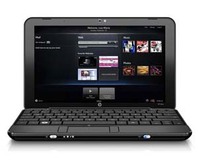
With the demand for low-cost, fully web capable machines set to soar massively this year, could Windows XP be given another reprieve before its expected June 2008 retirement?
With the impending flood of low-cost, fully web capable PCs—to compete with the Asus Eee PC—coming to market later this year, it’s possible that Microsoft will extend the deadline for the discontinuation of Windows XP—even though the company publically sticks to its already-revised June deadline.
I’m sure that Microsoft is hoping that the release of Windows Vista Service Pack 1 will push more end users to upgrade to the company’s latest operating system. However, the market of low-cost ‘netbooks’ and ‘nettops’ is expanding fast and is a massive growth opportunity for the many Linux distributions on the market because these machines aren’t fast enough to run Windows Vista—never mind delivering an acceptable computing experience.
What’s more, according to
CNet blogger Ina Fried, Microsoft had to do a lot of work to get Windows XP on the Eee PC.
With the impending flood of releases into this new class of devices—along with the introduction of the Mobile Internet Device later this year—Intel in particular has been very clear in its intentions to push Linux on these new devices.
We recently talked to Anand Chandrasehker, Senior Vice President and General Manager of the Ultra Mobility Group at Intel, where he explained that Intel was keen to drive innovation in these new markets and an open source software platform like Linux is ideal in that respect.
And, from Microsoft’s perspective, it needs to continue pushing Windows XP in order to compete with Linux in this market as Windows XP Starter Edition—a cut-down version of the popular OS designed for emerging markets—is not feature-rich enough to compete with the open source alternatives.
Do you think the company will extend Windows XP’s deadline even further and, more to the point, will the OS still be available on full-featured systems? Let us know your thoughts
in the forums.

sorry for my ignorance, i know nought about hacking and viruses. just a thought.
You know, I've always thought that too.. but I think the idea is that since everything is open, holes get closed up a lot quicker as they are noticed by the almost unlimited number of programmers working on it. Then again, since it's always been quite nerdy to run linux most people will be totally up to date, with all the latest kernel and whatnot. With 'regular people' buying eeePCs and such, the less aware user may be more open to malware...
OK, so data is probably a bad thing to loose, but technically, you should have a backup anyway
I also wonder though, if Linux moves from "Geeks" to the normal user, what will happen? i personally don't think (and I'm reasonably experienced in Linux) that i know how to secure, and check, a Linux machine (in terms of Virii/malware)
Back on topic
I'm suspecting MS is frantically working on a lighter version of Vista for these. I think one of their biggest fears is large numbers of people adopting an OS they don't control.
^lol
iirc, isn't the OS partion on the Eee Read only to prevent this kind of thing from happening?
not unless you have a habit of logging in as root and executing random shell scripts in emails to see what happens. If you have insecure aplications you can always give them there own restricted user account etc. which is always a good idea for things like FTP servers. Also as linux is open source far more eyes check the source code than windows and there are many more people working on patches so undiagnosed / fixed security problems are alot less prevelent than closed source software.
XP is a decent ish os for gaming and is the only OS where I can run Alteras FPGA software (they charge $$$$$$ for the linux versions). Wouldn't touch vista with a bargepole... WINE is faster in many cases than that bloated POS. As for the small laptops I would duel boot personaly as I need some windows software, I think a duel boot option would be very good.
that is what people were saying when XP came out......
That is, at best, a matter of opinion. There aren't really that many competent software engineers working on the critical bits at any one time - very likely fewer real contributors than a commercial package. What you're saying is the ideal, and peer review is always a good idea, but I'm concerned that the practical benefits are being overstated here.
The real problem, I think, is that the Linux security model is actually almost completely untried in the end-user desktop and laptop environments because until very very recently, it simply hasn't been used there, in more than the tiniest number of cases. We actually have no really objective idea how well or how poorly it's going to work. I suspect that the issues will come out of people simply not being able to drive Linux properly. I've been hammering keyboards since the ZX Spectrum was hot ****, and I find Linux daunting. Until recently, it's been difficult to find incompetent Linux users because you more or less had to be competent to even get the thing to install. The idea that Linux is in any way easier to use than Vista - or the idea that Linux is in any way easy to use full stop - betrays a misunderstanding of what most computer users are capable of, as well as not a small degree of complete and utter denial.
P
Phill you forget that installing and using an os are totally different things, my mum couldn't install vista or XP but quite happily use Debian for all her (limited) computing uses. You also forget that as an XP power user you find a huge jump trying to do the things you were good at in Windows but don't know where to start in Linux, if however you only need icons on the desktop saying web, email, games etc the curve is virtually flat. You make the mistake you mention above of putting all users in the techy category, most users don't need to know how to install an OS or how to diagnose a network.
most people don't even imagine what is inside the box.....