The Opteron line of server chips is due a refresh with six- and twelve-core units due along with a format change.
Chip manufacturer AMD has announced its latest roadmap, and there's some exciting new chips promised to keep Intel on its toes.
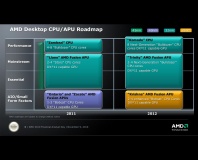
Announced yesterday by Randy Allen, the vice president of AMD's Server and Workstation division, the plan outlines the upcoming chips right through to the start of 2010. Allen described the update as a plan for the company to “
strengthen its alignment with end-customer priorities.” Whatever
that means.
The first signpost on the roadmap is
Shanghai, AMD's first 45nm chip aimed at the server and workstation market. As we've
mentioned before, these chips are designed as a replacement for the current range of
Barcelona chips.
In addition to a die shrink – which helps keep energy usage and heat production down – the chips will feature coherent HyperTransport 3.0 on-board for rapid transfer between processors in an SMP system, along with enhancements to the number of instructions that can be carried out in a single clock cycle. The chips will also enjoy an increase in shared L3 cache memory from the current 2MB to a whopping 6MB, which should go some way to boosting performance. The first
Shanghai chips are due in the second half of this year.
Next up we have
Istanbul, due in the second half of 2009. Designed as a drop-in upgrade for current Socket F1 motherboards, this chip is a six-core unit aimed at servers and workstations with more than one physical processor. In order to minimise the bottlenecks that can occur in systems with large numbers of logical cores, AMD is planning to implement their Direct Connect Architecture to keep the data whizzing as quickly as possible. Now, I don't know about you, but an affordable twelve-core server has me practically salivating with anticipation.
If you're already bored of the Socket F1 architecture, don't worry: AMD is planning to retire the current Opteron socket layout in favour of the third-generation Socket G34 in the first half of 2010. The new format – aside from requiring you to purchase a new motherboard to keep your server up to date beyond 2010 – will introduce full support for DDR3 memory, and will run on the RD890 chipset.
Now, a new motherboard layout is useless without some shiny new chips to pop in there, so you'll be pleased to hear that the Socket G34 boards will be released alongside a six-core processor known as
Sao Paolo, with DDR3 support and multiple HyperTransport 3.0 links. If six cores isn't two-thousand-and-ten enough for you, you'll have the option of investing in a couple of
Magny Cours, which will feature all the refinements of the
Sao Paolo series but with a whopping
twelve cores per processor.
While the roadmap is subject to change and concrete details on anything beyond the
Shanghai level are rarer than hens' teeth, it certainly seems that AMD isn't willing to concede the server market to Intel quite yet.
Looking forward to getting your hands on some twelve-core goodness, or are you waiting to see what Intel's response is going to be before planning your 2010 gaming rig? Share your thoughts over
in the forums.

I really hope this gets AMD back in the spotlight again. With the quite frank failure of Phenom, it would be great to have AMD getting a slice of the market cheesecake.
There is nothing too badly wrong with Phenom but when compared to the competition that aren't so good.
At least in Server and workstation market the software exist to make a phenom times better than the Intel products.
One note. Recently we expand out design team and got three Phenoms 9650. We use Planit Fusion and Virtual Worlds.
In the same office we had two Q6600 for the to other employees.
I run some tests and the findings were impressive. Rendering in both systems, the Phenoms hit 100% on all four cores.
The Intel quads only cores 2 and 3 hit 100%. The other two kick in when the user start doing something else.
I check the systems very close and I didn't found something to create such behave.
Leaving idle the systems and let them do rendering the Phenoms finish it in 2/3 of the time the Intel ones need!
Keep in mind the companies creating the apps are using multi threading code.
Do you have ANY facts to back up those statements?
Anyway, I stopped being impressed by paper releases and roadmaps a long time ago. I'll go cheer when the first 6 or 12 core CPUs are popped in one of the servers I administrate...
I don't think any announcements from this guy would involve home computing. Its not that the home market is being ignored, its just that division wasn't involved in this particular announcement. When the head of the Sony PS segment makes an announcement you don't question why he didn't comment on their TV division.
I really feel that AMD had never let one segment get too far ahead of the other. So a long with these, I think AMD will have plenty of advancements to tie right along with their server focus. Far more home PCs are sold then servers. But I also feel that right now AMD has to focus on where it can attack a market and increase profits more effectively. I think this is right where they should be aiming right now. Let them reassure people they aren't rolling over with Intel. Once they prove they can gain some market share in servers then they will make a hard push in the home PC market.
I just hope they can remain competitive. Because with the latest from VIA, it seems they will be taking a huge chunk of market share from AMD with their new low power CPUs for UMPCs. While I don't mind VIA getting headway, they really aren't rounded enough to be considered a true head to head competitor with Intel. This clash wouldn't really result in the true freedom of choice that a competitive market needs to promote advancements in technology.
Andy
Look at their financial reports they are losing alot of money plus key personel, I also found the same statement I said in this article
http://www.custompc.co.uk/news/602517/nvidia-amd-cant-afford-to-compete.html
pure coincidence? i don't think so
Either way I really hope this does bring AMD back to level or top of the hill.
Personally, I don't think AMD is in all that much trouble. People leaving the leaving the company can be a good thing. Sometimes, you get an influx of fresh minds and ways of thinking when the old war dogs leave. I look forward to what AMD has to offer in the future.
BTW - Every PC I have owned has had an Intel processor.